Strengthening Observation Networks Through Technical Exchange: ICOS Germany Annual Technical Meeting
At the beginning of October, Forschungszentrum Jülich welcomed the annual meeting of the ICOS Germany technical teams, bringing together experts from around 30 observation stations that contribute to the Europe-wide Integrated Carbon Observation System (ICOS) network for greenhouse gas monitoring. Over two days, participants exchanged practical experiences, discussed technical developments, and explored solutions to the challenges of operating and maintaining high-quality environmental observation infrastructure.
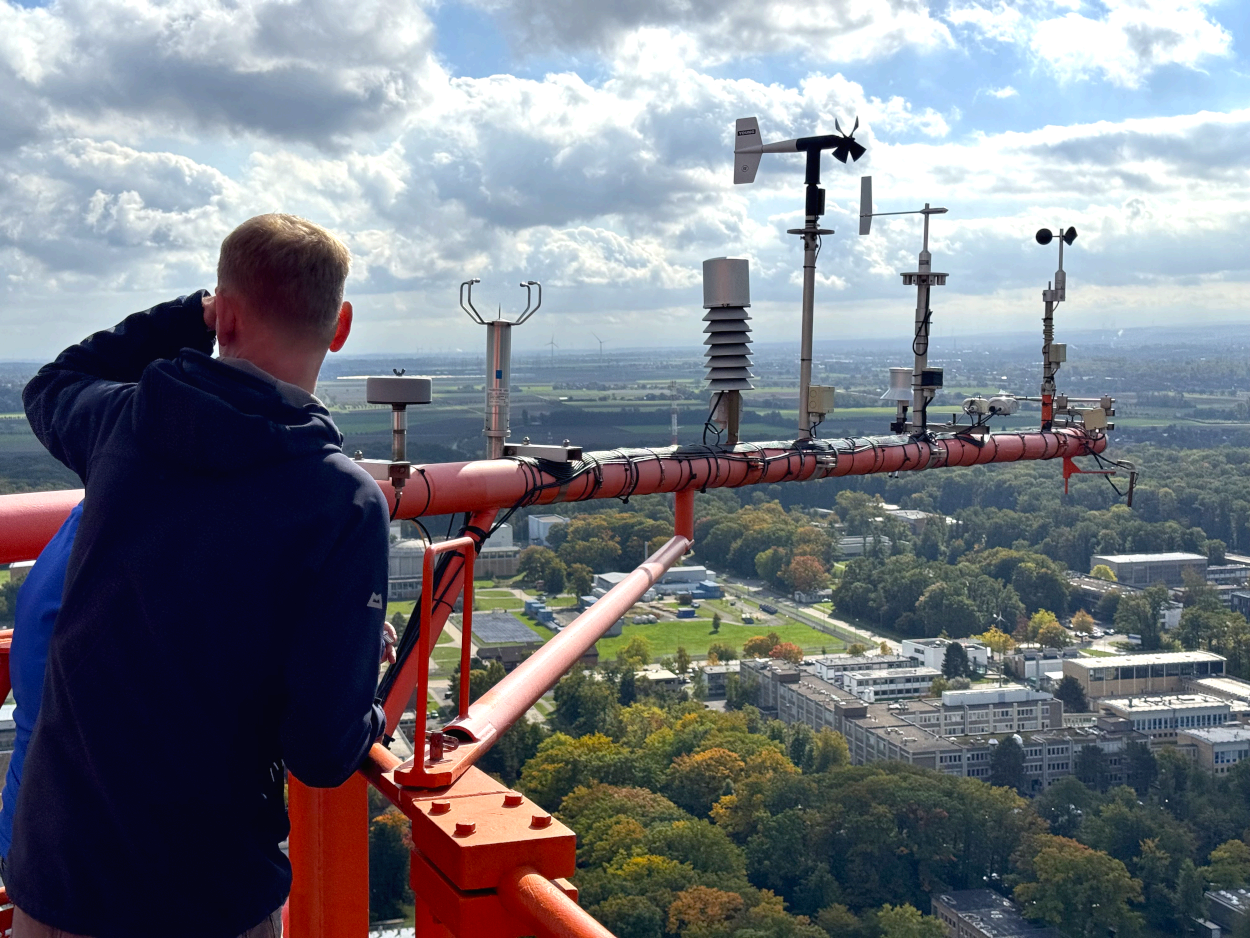 On top of the measurement tower - source: TERENOAs part of the program, attendees visited the TERENO agricultural research site in Selhausen, the TERENO forest site in Wüstebach, and the atmospheric observation station at Forschungszentrum Jülich, operated by the German Weather Service (DWD). A highlight for many was the opportunity to access the top of the 120-meter measurement tower and gain first-hand insights into station operations and measurement technologies.
Unlike the established ICOS Germany scientific meetings, which focus primarily on research outcomes and strategic directions, this annual gathering emphasizes the technical expertise behind long-term environmental observations. Since its launch in 2022, the event has become an important platform for sharing operational knowledge across the network.
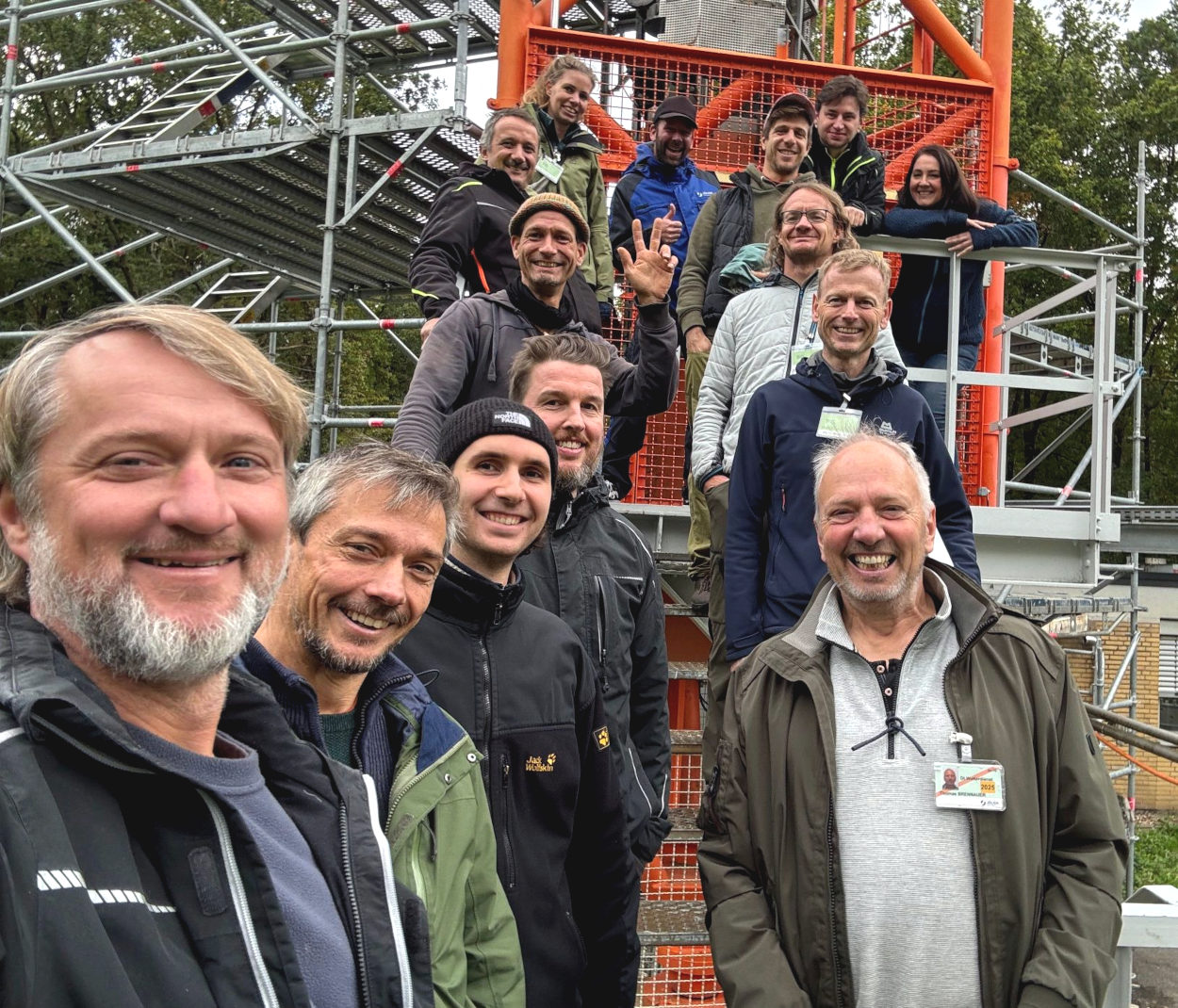 Visiting the measurement tower - source: TERENOTopics discussed this year ranged from implementing eddy covariance and biometeorological sensors to handling vegetation and soil sampling. Participants also exchanged experiences with emerging technologies, including nitrous oxide (N₂O) laser analyzers and advances in high-precision GPS systems that support sensor calibration and field measurements.
Practical day-to-day challenges were equally important—from selecting suitable cable configurations and weatherproof connections to protecting stations from environmental influences such as birds and rodents. Events like these demonstrate that reliable climate observations depend not only on scientific excellence but also on strong technical collaboration and continuous knowledge exchange across teams.
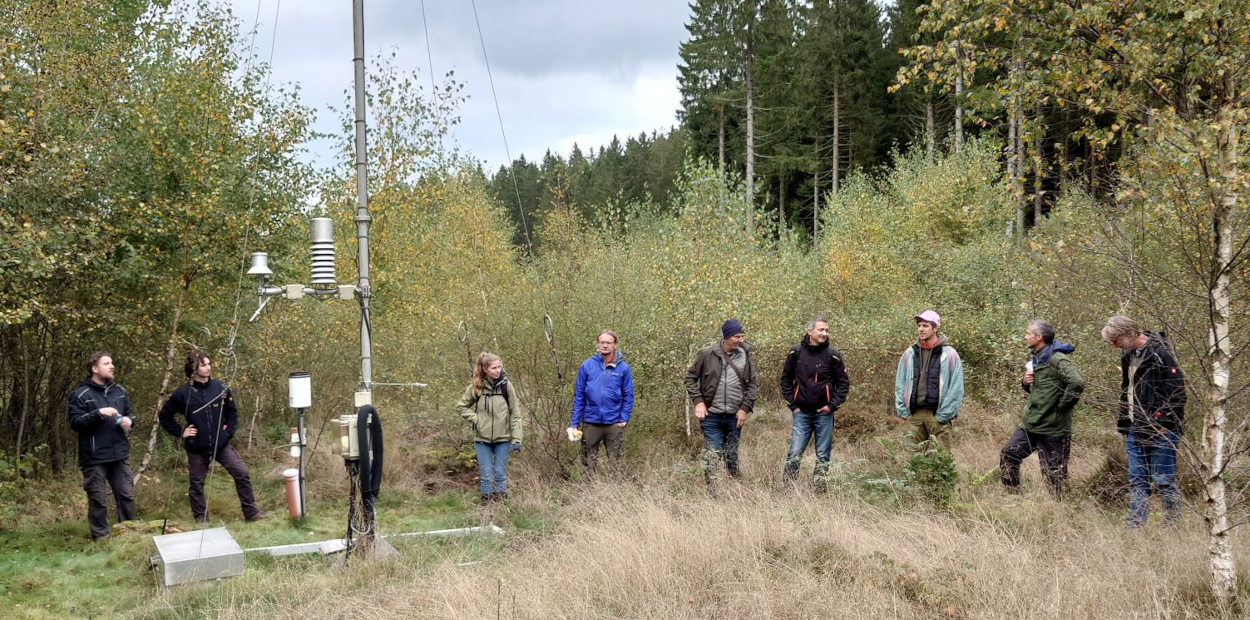 On-site visit - source: TERENO